
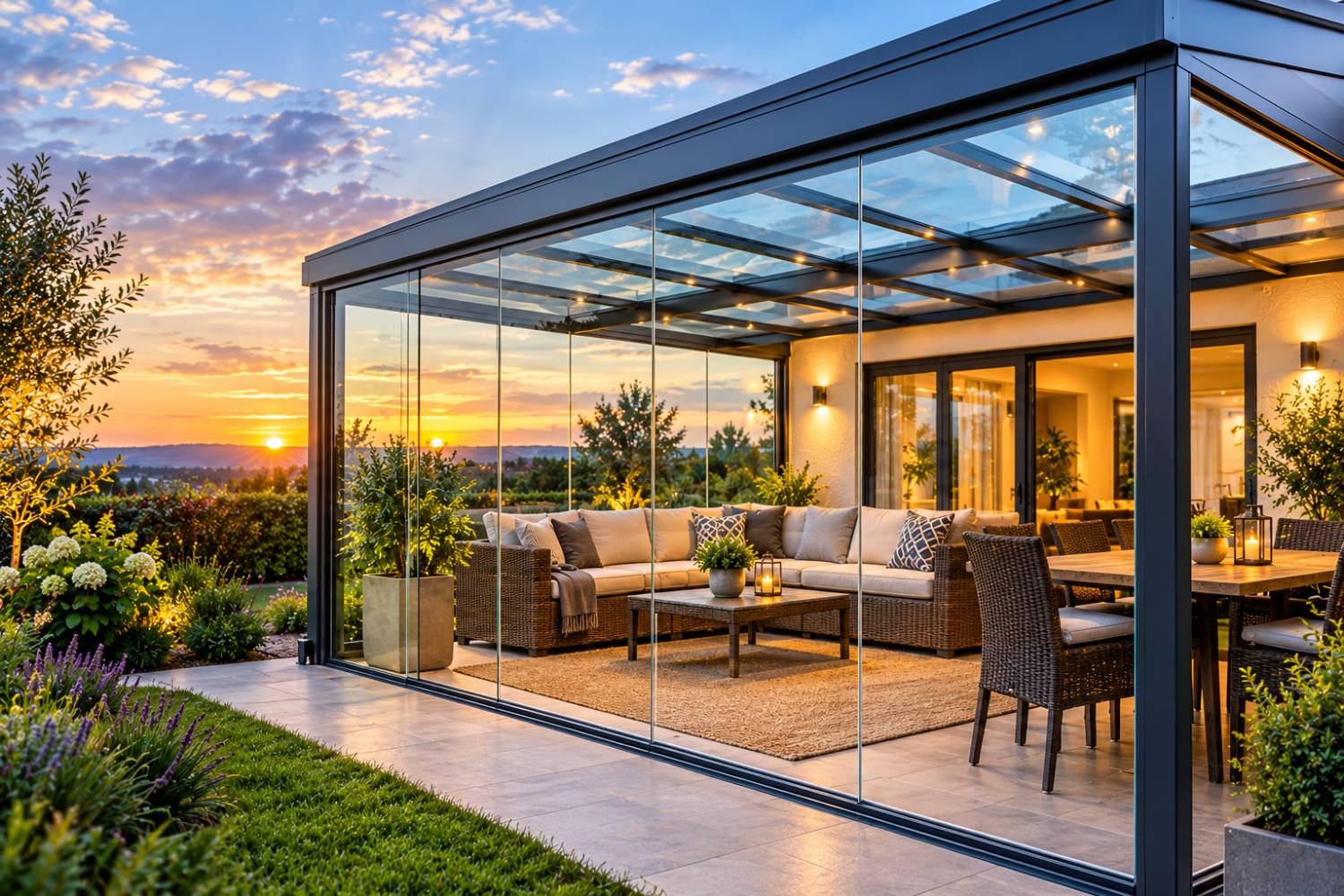
A patio is a valuable part of any garden, but Britain’s unpredictable weather can make it difficult to enjoy throughout the year. Rain, strong sunlight and colder evenings often limit outdoor activities, leaving garden furniture and seating areas unused for months.
Installing glass verandas offers a practical way to make patios more comfortable and accessible across different seasons. These structures provide overhead protection while maintaining natural light and an open connection to the garden, creating a sheltered space for relaxing, dining and spending time outdoors.
What Is a Glass Veranda?
A glass veranda is a permanent outdoor structure featuring a transparent roof supported by a sturdy framework. It is usually attached to the exterior wall of a property and extends over a patio, terrace or garden seating area. Most designs use aluminium frames and toughened safety glass. Aluminium is lightweight, durable and resistant to corrosion, while toughened glazing provides strength and protection against everyday weather conditions.
Unlike a conservatory, a traditional glass veranda generally has open sides. This allows fresh air to circulate while providing shelter from rainfall. Additional side panels can offer greater protection where required.
How Glass Verandas Improve Outdoor Living
One of the main advantages of a glass veranda is the ability to use outdoor spaces more frequently. A covered patio becomes less dependent on dry weather, making everyday activities easier to plan.
The transparent roof allows daylight to pass through, helping maintain a bright atmosphere underneath. This is particularly beneficial when the veranda is positioned near windows or patio doors. A veranda can also provide some protection for outdoor furniture against direct rainfall. However, because the sides remain open, furniture may still be exposed to wind-driven rain and moisture.
During warmer months, the sheltered area can accommodate outdoor dining or relaxation. In autumn and winter, suitable heating and additional screening may extend its usability.
Choosing the Right Design for Your Patio
Selecting an appropriate design involves more than choosing an attractive structure. The veranda should complement the property’s appearance while meeting practical requirements.
Roof configurations can vary, with contemporary sloping designs and gable-style options available. The ideal choice depends on the building’s architecture, available space and drainage requirements. Frame colours and finishes also influence the overall appearance. Neutral finishes often work well with different exterior materials, while carefully selected contrasting colours can create a more distinctive feature.
The veranda’s dimensions should allow sufficient room for furniture and movement without overwhelming the garden. Accurate measurements are essential, particularly where existing doors, windows or drainage systems could affect installation.
Important Factors to Consider Before Installation
Careful planning helps prevent common problems and ensures the veranda suits its intended purpose.
- Patio dimensions: Measure the available width and depth, allowing adequate space for furniture and access.
- Sunlight exposure: Consider how the direction of sunlight affects comfort throughout the day.
- Drainage: Ensure rainwater can flow safely away from the roof and building.
- Structural support: Check that existing walls and suitable foundations can support the proposed installation.
- Privacy: Consider neighbouring properties and whether additional screening is necessary.
- Future accessories: Decide whether lighting, heating or side panels might be required later.
Discussing these details with an experienced installer helps identify limitations before construction begins.
Can Glass Verandas Be Used Throughout Winter?
Glass verandas provide valuable shelter during colder months, but an open-sided design does not offer the same protection as an enclosed room.
Although the roof prevents rain from falling directly onto the covered area, cold air and wind can still enter from the sides. Consequently, comfort depends on weather conditions and the veranda’s location. Adding glazed side panels can reduce exposure to wind. Outdoor heaters may also improve comfort during chilly evenings, provided they are suitable for the installation and used according to safety guidance.
Homeowners seeking a fully enclosed space should consider whether a glass room would better meet their requirements.
Managing Sunlight and Temperature
A transparent roof allows plenty of natural light through, but it can also create uncomfortable temperatures during strong sunshine.
Roof shading systems or suitable blinds can help control glare and reduce direct solar exposure. The need for shading depends on the veranda’s orientation and how frequently the space receives sunlight. Ventilation is another important consideration. Open sides naturally encourage airflow, while enclosed configurations require more careful attention to temperature management.
Choosing appropriate glazing and shading arrangements during the design stage can improve comfort without compromising the veranda’s appearance.
Planning Permission and Professional Installation
Some glass verandas may qualify as permitted development, but this should never be assumed. Requirements depend on factors including the property’s location, design, dimensions and previous alterations.
Additional restrictions may apply to listed buildings and properties within conservation areas. Homeowners should check with their local planning authority before committing to installation. Building regulations may also apply depending on the structure and its attachment to the property.
Professional installation is particularly important because the framework, glazing, fixings and drainage must work together safely. A qualified installer can assess wall suitability, structural loading and appropriate installation methods.
Cleaning and Maintaining a Glass Veranda
Regular maintenance helps preserve the veranda’s appearance and prevents avoidable deterioration. Glass roofing can collect leaves, dirt and bird droppings. Cleaning with warm water, mild detergent and suitable non-abrasive equipment can help maintain visibility. Gutters and drainage channels should also be inspected periodically to prevent blockages.
Avoid walking on glass panels or leaning ladders directly against the structure. Where safe access is difficult, professional cleaning is preferable.
Checking seals, fixings and visible framework components can also help identify developing problems before they require more extensive repairs.
FAQs
Q.1 Can a glass veranda be installed on an existing patio?
Ans: Yes, provided the patio and surrounding structure are suitable. An installer should assess the foundations, available space and fixing points before confirming installation requirements.
Q.2 Are glass verandas suitable for small gardens?
Ans: Yes. Made-to-measure designs can accommodate smaller patios, although sufficient space must remain for movement, drainage and comfortable use.
Q.3 Do glass verandas make adjoining rooms darker?
Ans: Their transparent roofing generally allows more daylight through than an opaque covering. However, the framework, roof angle and shading accessories can influence the amount of light entering nearby rooms.
Q.4 Can side panels be added later?
Ans: Some systems allow additional side glazing, but compatibility depends on the original design. Discussing possible upgrades before installation helps avoid unnecessary alterations.
Q.5 How long does a glass veranda last?
Ans: Its lifespan depends on material quality, installation standards, weather exposure and maintenance. Regular cleaning and inspections can help maintain the structure’s condition over time.
Conclusion
A glass veranda can make an existing patio more practical by providing permanent overhead shelter while preserving natural light and garden views. Choosing suitable dimensions, glazing, framework and optional accessories helps create a space that remains useful across different seasons.
Before installation, assess the patio’s condition, sunlight exposure, drainage and planning requirements. Seeking professional advice on structural suitability and design will help ensure the finished veranda is safe, comfortable and appropriate for the property.
Add a stronger buyer decision guideClarify veranda versus conservatory.
Leave a Reply
You must be logged in to post a comment.